
What’s The Best Way To Use Skill Checks?
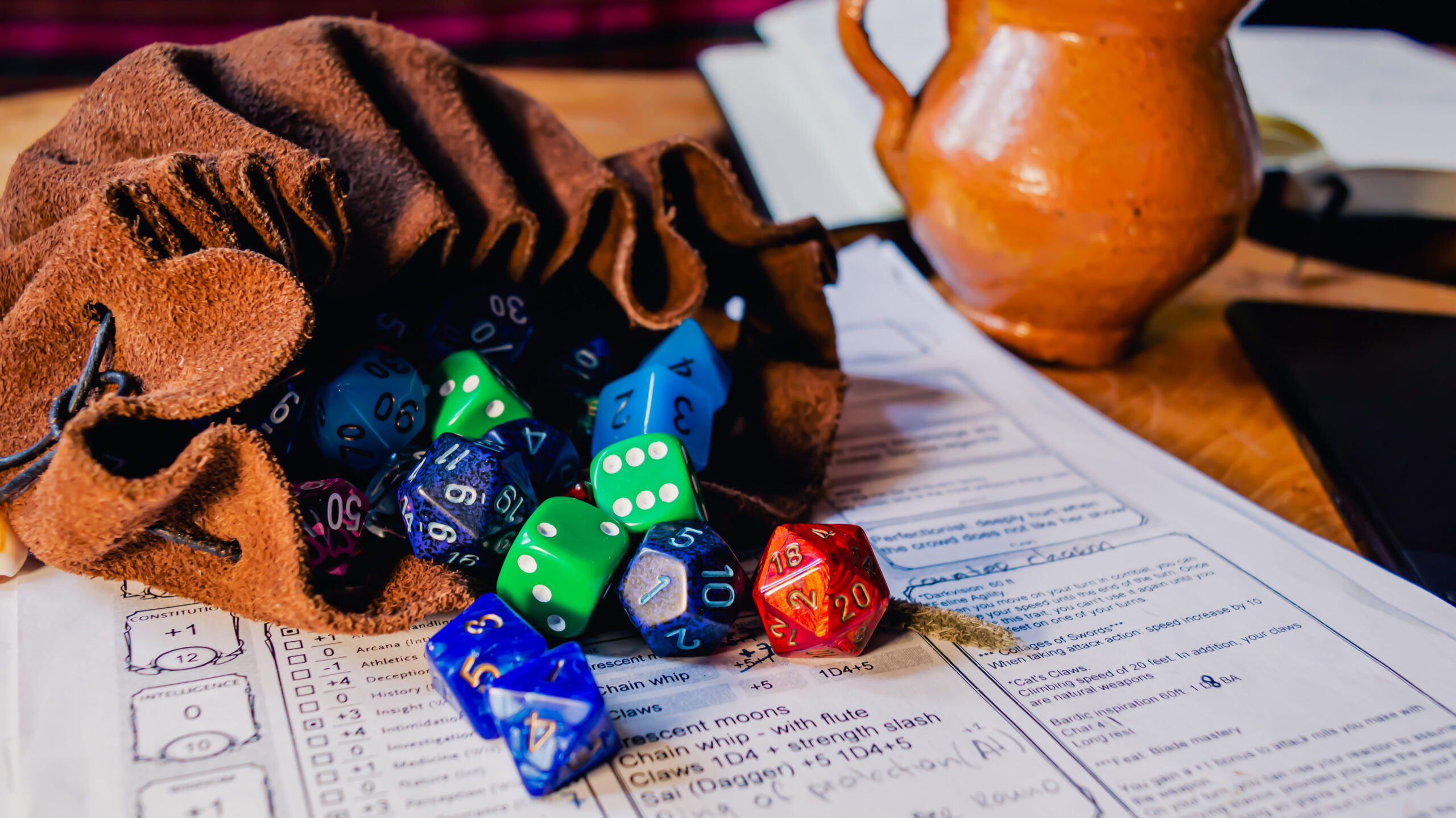
When playing tabletop games we have to resolve the success or failure of actions somehow. In Dungeons & Dragons, what is the best way to use the systems for skills and abilities? Furthermore, when should we be rolling at all?
Different game systems will have various ways to resolve player and NPC actions. In some games, only player-initiated actions cause a roll to happen. Today’s examination will only look at action resolution in fifth edition. To start the topic, let’s see what’s written in the rulebooks about how to roll, what to roll, and when to roll.
How to roll checks.
Whether you are rolling an attack, a saving throw, or an ability check, the method is always the same. You will roll a twenty-sided die, apply any relevant modifiers, and compare if you have met or exceeded the number required to succeed. There are additional rules for things like advantage, disadvantage, and rerolling checks but they won’t be relevant for this discussion so they will have to wait until another time.
What are the relevant modifiers then? The first thing to understand is your proficiency bonus. This number will be on your character sheet and the amount is based on your level. This bonus is added to any roll using a skill or action you are proficient in. A fighter who swings a weapon at a foe will be adding their proficiency bonus, and either their strength or dexterity bonus as needed for the weapon used. However, a wizard using a weapon is likely not proficient with it and therefore only adds their ability modifier to the attack roll.
What do I roll for?
As mentioned before there are three main types of die rolls: Attack rolls, which are made with weapons or spells to target and damage an enemy. The number to compare for difficulty when making attack rolls is the target’s armor class or AC for short. Next, we have saving throws. These are rolls you make to avoid something happening to you, you do not choose to make saving throws as they are something forced on you. When making a saving throw there will be a difficulty class which you need to meet or exceed, and the effects that occur on a success or failure.
Lastly, we come to ability checks. These are often mislabeled as skill checks by players and GMs alike, however, this is not quite accurate. You do not actually test against skills in 5E but against your ability modifiers. When you try to jump a long gap you will likely use the athletics proficiency if you have it and add it to your strength modifier. But what if you’re not using athletics? Strength may be the ability required to clear the gap, but if there is an exceptionally tight landing area the proficiency you add may come from acrobatics.
But skills have associated abilities.
If you’ve glanced over the skill proficiencies on your sheet you probably noticed each has an attached ability. These are the suggested modifiers to add when using the relevant proficiency, although they are not the only ability you can add that proficiency to when making a check. In chapter 7 of the PHB, you’ll find guidelines on the ability scores and how to use them.
The rules for using different abilities with skill proficiencies are suggested as a variant or non-standard rule. However, in chapter 8 of the DMG on running the game, you’ll find that a GM asking for unique combinations seems normal. My conclusions are that while a GM can certainly ask for any combination of ability and skill, players making suggestions is considered abnormal, but possible.
This raises the question of whether you should use skills with abilities that are not considered normal for that skill. In some cases, it simply makes more sense. If you have a warrior with a gladiator background they likely have the performance proficiency. Performance is considered a skill attached to charisma, something that player may not have focused on during character generation. If that character is a knight who wishes to put on a show for an important NPC you could allow a strength performance check for the action. This would represent the character displaying something akin to a joust or test of strength for entertainment.
So when should they roll?
For players reading this I will suggest only one thing. Please, do not throw dice before the GM has stated you should make a roll. This leads to my advice to the game masters reading. Your players should not have to roll for everything. If a character is proficient in a skill and there is no imminent threat or obstacle to success in the way, they often should succeed with no check required. This returns us to the chapter on running the game in the Dungeon Masters Guide.
Around page 236 the DMG covers a number of topics on the “role” of dice in your game. The first is how often you should rely on dice versus narrative methods of resolving challenges and obstacles. This of course can vary from game to game, but typically your characters should have die tests and narrative success. The main factor in which method is best at any given moment depends on the circumstances.
This brings us to the next topic covered in this section. If a task is incredibly easy or has no outside pressure or mitigating factor, then the action should succeed. The book also mentions that if the chosen action is not possible at that time or in those circumstances, you should not allow the player to attempt the die roll. Sometimes failure or success will be a guarantee. Further guidelines are explained for using proficiency or the abilities statistic to decide if a task should automatically succeed.
It all comes together.
Some moments in a game will rely heavily on the result of a thrown die. Others will be resolved or failed without any roll needed at all. In other cases to meet the need of the narrative or allow the player to utilize their character’s strengths, a check should be made with a different ability than is suggested by the proficiency.
A classic example is the towering barbarian who cannot manage the intimidation of a common fly. If you only use the suggested ability for the skill, charisma, narrative dissonance can occur if the target NPC ought to fear the player. This is even brought up in the section mentioned in the PHB. To end with a quote. “Similarly, when your half-orc barbarian uses a display of raw strength to intimidate an enemy, your DM might ask for a Strength (Intimidation) check, even though Intimidation is normally associated with Charisma.” (Player’s Handbook, 2014, Wizards of the Coast. p. 175).
As you play, remember this most important fact. You are experiencing this game together, players and game masters. What is most narratively and mechanically satisfying for the group is how you should resolve your challenges and actions. Discuss what you feel is best with your table and act accordingly. Happy gaming.




Having waves of attackers make it easier to adjust combat on the fly. Maybe there is a barracks room within…